



About Diagnostic Medical Sonography
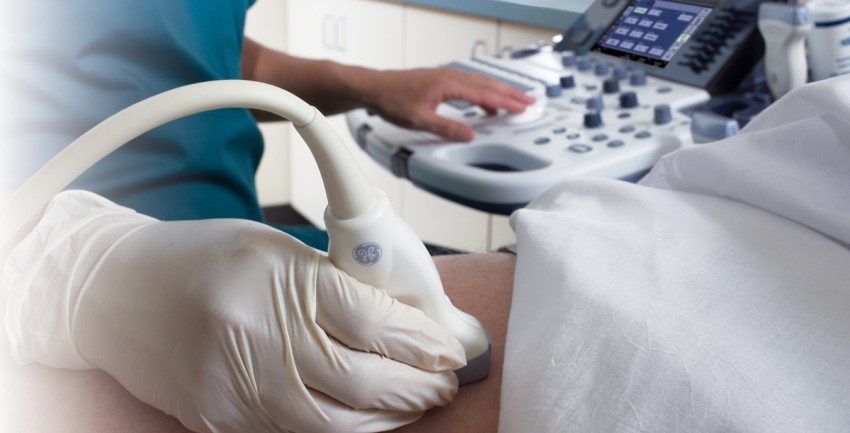
The field of diagnostic ultrasound or medical sonography utilizes high frequency sound waves to image and evaluate organs and soft tissue structures of the body. The diagnostic medical sonographer is a skilled person qualified by academic and clinical education to perform sonographic examinations under the supervision of a qualified physician. The sonographer will perform a variety of diagnostic examinations to include evaluations of the brain, abdomen, peripheral blood vessels and studies of the pregnant and non-pregnant female patient. The skilled sonographer has a unique and vital role in the diagnostic process and continues to offer many excellent opportunities for employment.
The sonographer’s responsibilities include, but are not limited, to:
Sonographers must also be knowledgeable about and limit the risk from possible exposure to blood and body fluids. They should also be aware of the potential for repetitive strain injury and take steps to limit their risk.
Program Mission and Goals
The mission of the Diagnostic Medical Sonography Program is to prepare competent, ethical and culturally sensitive entry-level sonographers who are dedicated to lifelong self-directed learning, who are capable of functioning in a dynamic and ever changing area of health care delivery.
To develop in our students a high degree of personal integrity along with the technical skills, confidence and knowledge needed to fulfill their personal goals as well as benefit the community in which they are employed.
To develop in our students a high degree of personal integrity along with the technical skills, confidence and knowledge needed to fulfill their personal goals as well as benefit the community in which they are employed.
The program is committed to preparing sonographers who are capable of functioning in a dynamic and ever changing area of health care delivery.
To provide a curriculum that is continually reviewed and revised according to advances in technological research and national registration.
Program Description
St. George’s University offers the 20-month curriculum of full-time study that leading to the academic certificate in diagnostic medical sonography. Students receive theoretical and clinical instruction in all aspects of diagnostic ultrasound in preparation for entry-level positions as diagnostic medical sonographers. You will be certified in the field of Abdominal Sonography with the Superficial Parts, OBGYN and Vascular Sonography, Ultrasound Physics with Introduction to Echocardiography. Upon the completion of the program, you will be eligible to take the National Registry Examination.
Admission Criteria Specific to This Program
To complete the admissions requirements, see our Admissions page. Applicants must be a High School graduate, of a have earned an associate degree or higher, have completed a post-secondary allied health program, or will have met the baccalaureate requirements from the primary educational institution.
Educational Outcomes
It is the goal of the Diagnostic Medical Sonography Program and each of its clinical affiliates to provide all students with didactic and clinical education, to include hands-on practical scanning experience.
DMS Curriculum
The Curriculum is based on the requirements of Joint Committee in DMS/JRDMS and provides a foundation for graduates to become highly skilled in providing patient services using diagnostic ultrasound under supervision of a physician. The student-sonographer is learning to perform the examination, provide patient care and comfort, records anatomic, pathologic, physiologic data for the interpretation by the physician. Each course builds upon material offered in previous course. To be maximum benefit to the student-sonographer and to enhance versality and skills, a wide variety of clinical sites are provided, including hospitals, outpatient clinics, independent imaging centers.
Students will be specialized in three of the following tracks: General Abdominal, OBGYN Sonography and Vascular Investigation with the basic presentation of Advance Sonographic Techniques such as Echo-Cardio and Neurosonography.
Students will be specialized in three of the following tracks: General Abdominal, OBGYN Sonography and Vascular Investigation with the basic presentation of Advance Sonographic Techniques such as Echo-Cardio and Neurosonography.
Curriculum
The following explains the requirement an applicant must meet to be considered for admission: